Hey guys, let’s cut to the chase – if you work in mining, aggregate processing, or any heavy equipment space, you’ve probably stared at a cracked crusher frame at 2 a.m. in a worksite parking lot, sipping gas station coffee and wondering if this $100k hunk of metal is toast. I’m the lead crusher frame rep for our team (yeah, I’m the one you email when you panic at 9 a.m. on Monday) and today we’re breaking down exactly if a damaged crusher frame can be fixed – no fancy engineering jargon, just real stuff we’ve seen on our jobs and labs. Crusher Frame
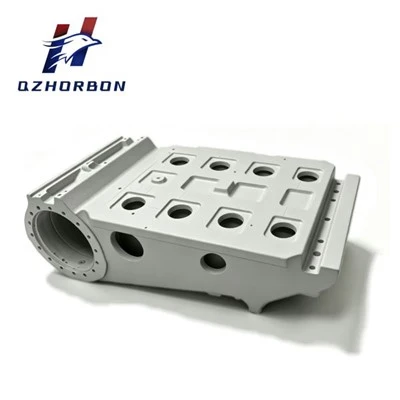
First, let’s get one thing straight: crusher frames aren’t like your lawnmower frame that bends and straightens back easy. These bad boys are forged from high-strength steel (mostly carbon steel, sometimes alloyed with chrome or moly) to take thousands of tons of impact, vibration, and abrasion every single day. So not every scratch or tiny crack is a death sentence – but there’s a time and a place to weld, grind, or patch, and a time to just bite the bullet and get a new one.
Let’s start with the most common damage we see: surface cracks or micro-cracks. These are usually from heavy vibration or minor overload, not a catastrophic hit. Last year we had a quarry in West Virginia that brought in a cone crusher frame with some hairline cracks in the side panel, right where the counterweight mounts. Their on-site weld guy wanted to grind ‘em and fill ‘em with a stick welder, but we stopped him – surface cracks near high-stress areas aren’t just a little flaw; they can spread when the frame is under load. What’s the right fix here? First, we do a non-destructive test (NDT) – dye penetrant or ultrasonic testing – to make sure the cracks don’t go deeper than 1/8 of an inch. If they’re just skin deep, we grind out the crack until we get clean, solid metal, preheat the area to 300-400 degrees (to prevent cold cracking, which is the #1 mistake bad welders make on these frames), then use a low-hydrogen welding rod designed for high-strength steel. We also add a reinforcement patch – a thick steel plate bolted and welded over the area – to take some of the stress off that spot. That fix lasted that quarry three full years, no issues. But if that crack was deeper than 1/8 inch? Grinding it out would leave too thin a wall, and that’s a no-go.
Next up, the big scary one: structural cracks, especially in the main load-bearing members. Like, the kind that run along the frame’s cross beams or the side that connects to the crusher’s main shaft. I remember a job in Nevada a couple years back – a jaw crusher frame got hit by a rogue boulder, cracking the main truss beam clean across, right at the point where all the crushing force hits. The quarry initially thought they’d have to replace the whole frame (which would’ve shut down their operation for 6 weeks, costing ‘em like $500k a week – yikes). We were able to repair it, but only because we did a full stress analysis first. Structural cracks aren’t just about the crack size; it’s about where it is and how much load that part of the frame takes. For this one, we removed the cracked section, preheated the entire beam (not just the crack area, because the whole beam was under residual stress), welded in a custom steel splice, then did a post-weld heat treatment (PWHT) to relieve all the weld stress. Then we put the frame through a full load test in our shop, pushing it to 120% of its rated capacity, and it held. That repair was half the cost of a new frame, and they got back up and running in 10 days. But here’s the catch: this only works if the crack isn’t in a high-wear, high-abrasion zone, and if the frame didn’t bend out of shape so bad the metal’s grain structure was permanently damaged. If the metal’s stretched or warped beyond its yield point? Welding it won’t fix that – it’ll just fail again.
Now let’s talk about what you can’t fix. Bending – that’s a big one. Crusher frames are built to be rigid, so if they bend even 1 degree, that throws off the alignment of the entire crusher. Even a tiny bend in the main shaft housing can make the crushing chamber wear unevenly, leading to lost production and more damage down the line. We once had a customer try to hammer out a bent frame on a impact crusher – big mistake. Hammering introduced micro-cracks all over the bend, and a month later the frame split in half during a shift, shutting ‘em down for 3 months. Another no-go: severe abrasion or gouges. If you have a 2-inch deep gouge from a rock hitting the frame, grinding it down will leave a weak spot that’ll crack under load. We’ve had customers try to fill big gouges with epoxy or regular steel plates – that’s temporary at best, and dangerous at worst. Epoxy can’t take the heat and vibration from a crusher, and bolt-on plates that aren’t matched to the frame’s design will vibrate loose and cause more damage.
Wait, but what about the elephant in the room: welding quality. I can’t stress this enough – 90% of bad crusher frame repairs fail because someone used a random welder who does farm equipment or car frames. Crusher frames are under constant cyclic load, 24/7, 365 days a year. A weld that’s good for a tractor won’t hold up to that. You need welders certified specifically for heavy steel structural work, and they have to follow exact procedures: preheat temperature, electrode type, post-weld treatment, NDT testing after the weld is done. Last quarter we had a customer come to us with a frame they’d fixed at a local shop, and the welds were so bad you could see porosity in ‘em, and the welder didn’t even preheat the metal. We re-welded it, did full NDT, and that frame’s now been running for 8 months no issues. If you cut corners on the weld, you’re just throwing good money after bad and putting your whole operation at risk.
Also, let’s talk about when replacing is actually better – and it’s not always when the frame is totally destroyed. Sometimes repairing a frame costs 70% of a new one, and if you have to do it again in a year, that’s way more expensive long-term. Last year we had a mining company that had repaired their jaw crusher frame twice in two years, because the damage was in a high-abrasion zone that could never be fully fixed. We worked out a custom frame upgrade – same footprint, but with thicker steel and extra reinforcement in the high-wear spots – and that’s now been running for over a year without a single crack. That’s the thing: it’s not just about fixing the damage, it’s about fixing the reason the damage happened in the first place. A lot of frame damage isn’t just random – it’s from overloading the crusher, bad feed control, or not doing regular maintenance. We always advise customers to check their feeders, make sure they’re not dumping too much material too fast, and inspect their frames every 3 months, not just when something breaks.
Let me wrap this up with a quick checklist I give every customer:
- Get NDT testing first – don’t start welding until you know how deep the damage is and if there’s hidden cracks.
- Figure out where the damage is – is it a low-stress side panel or a main load-bearing beam? That changes everything.
- Use certified welders with crusher frame experience – no exceptions.
- If repair cost is more than 60-70% of a new frame, or you’ve repaired it multiple times, get a quote for a replacement (or an upgraded frame) – it’ll save you money down the line.
- Don’t skip the load test after repair – we do ours in our shop before a frame leaves, so you know it’s going to hold.
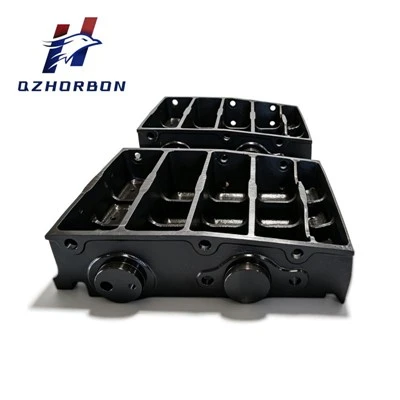
At the end of the day, crusher frames can be repaired in a lot of cases – but it’s not a DIY job, and it’s not a "fix it quick" job. It needs to be done right, by people who know this stuff inside and out. If you’re staring at a damaged frame right now, don’t guess – hit us up, send over some photos or the frame serial number, and we can walk you through what’s repairable, what’s not, and what’ll be the best move for your operation. No pressure, just real advice from people who’ve been in the same worksite parking lots at 2 a.m. sipping gas station coffee.
Crusher Rotor References:
- ASME Boiler and Pressure Vessel Code, Section IX: Welding Qualifications
- Machinery’s Handbook, 31st Edition: Crusher Frame Design and Repair Practices
- National Agrility Standard for Heavy Equipment Structural Repair, 2022 Update
Quzhou Horbon Mining Parts Co., Ltd.
Quzhou Horbon Mining Parts Co., Ltd. is one of the most professional crusher frame manufacturers and suppliers in China, featured by high quality customized service and OEM service. Please rest assured to buy premium crusher frame at competitive price from our factory. Contact us for pricelist.
Address: No.8 Nanshan Road, Qujiang District, Quzhou City, Zhejiang Province, China
E-mail: horbonmining@gmail.com
WebSite: https://www.horbonmachinery.com/
