Hey everyone, let’s cut to the chase — I’ve spent the last 8 years selling liquid packaging machines, and one question pops up at least twice a week from new ag clients, small pesticide formulators, and even farm co-ops: “Can your liquid packaging machine actually handle liquid pesticides?” It’s such a good question because pesticides aren’t your regular bottle of water or juice. They’re corrosive, messy, some are super volatile, and get this — a bad packaging job here isn’t just a hassle; it’s a safety hazard, a regulatory nightmare, and could even make the product totally useless. So today I’m breaking this down, no corporate jargon, just real-world stuff I’ve seen and solved for clients. Liquid Packaging Machine
First, let’s get the basics straight: what makes pesticides different from, say, the salad dressings we package for food brands? Most liquid pesticides are either emulsifiable concentrates (ECs), suspension concentrates (SCs), or soluble liquids. ECs are straight-up oily, corrosive, and eat through regular steel if you leave them too long. SCs have tiny solid particles suspended in liquid, so they can clog nozzles way faster than a sauce with suspended seeds. Then you’ve got volatile ones — like some fumigant pesticides — that evaporate so fast they can create pressure build-up mid-packaging, which leads to spills, fumes, or even broken bottles. Oh, and don’t forget the regulatory side: pesticides have to meet super strict EPA (or your local ag body) rules for leak-proofing, label durability, and product purity. If your machine is leaching metal particles into the pesticide, that changes its chemical composition and makes it illegal to sell.
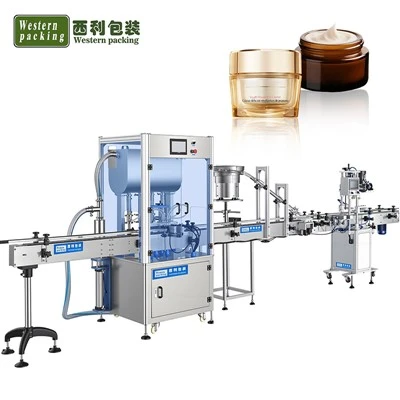
So the short answer first — yes, our liquid packaging machines work for liquid pesticides, but only if they’re built right for the job. I can’t just pull a random machine off our shelf and say “good for pesticides” — that’s how you end up with a client who’s stuck with a $20k paperweight because their machine corroded in 3 months. Let’s walk through what we actually do to make this work, because that’s the stuff no generic packaging supplier will tell you.
First, the materials. Regular liquid machine parts use stainless steel 304, right? For water, that’s fine. But for pesticides? 304 isn’t enough. We swap all the wetted parts (the parts that touch the liquid — filling nozzles, tanks, hoses, valves) for stainless steel 316L. Why? It’s way more resistant to corrosive chemicals, even the harsh ECs that would make 304 rust like a old bike left in the rain. For even nastier pesticides, we use PTFE (Teflon) lining on hoses and valve seats, because some acidic pesticides will eat through 316L over time. Last year we had a client who was packaging a super strong herbicide — they tried a competitor’s machine with 304 parts, and within 6 weeks the filling nozzle was pitted so bad it was under-filling by 10ml per bottle, leading to 500 bottles of product they had to toss. Switched to our 316L/PTFE set-up, and they’ve been running 18 months without a single part failure. That’s the kind of real result I care about.
Next, handling the viscosity and consistency. Pesticides aren’t one-size-fits-all. Some are thin like water, others are thick like molasses — the SC ones with solid suspended particles, for example. Regular filling machines use gravity or basic piston fills, which work for thin stuff but will leave thick pesticides half-filled, or even clog the nozzle. Our machines have adjustable piston fills with precise volume control down to 0.5ml. That’s important because if you under-fill pesticide, you’re shorting customers and breaking regulations. Over-fill, and you’re wasting product (which gets expensive fast when pesticides can cost $15+ per liter). We also have agitators for the filling tanks — super simple, but game-changing for SCs. If you don’t agitate, the solid particles settle at the bottom of the tank, so the first 10 bottles you fill are mostly liquid, and the last 10 are all solid sludge. We set our agitators to run at a slow, consistent speed that mixes the product without creating bubbles (more on bubbles in a sec). Another trick: we have filtered air purge for nozzles, so after every fill, we blast a tiny bit of air to clear any thick pesticide that’s starting to crust in the nozzle. No more clogs mid-run, no more stopping to unclog every 20 minutes — that cuts a packaging line’s downtime by 30% easy, based on the 20+ pesticide clients we’ve worked with.
Then the big one: safety and contamination control. Pesticides are toxic, duh. So you don’t want fumes getting into your work area, right? Our machines are fully enclosed, with sealed filling stations that have optional fume extraction ports. For volatile pesticides, we can add pressure control systems that adjust the nozzle fill speed to match the product’s evaporation rate — so when you open the nozzle, the pressure equalizes instead of spitting pesticide out. We also have sanitization protocols built in. A lot of pesticide formulators switch between products — one day herbicide, next day insecticide — and if you don’t clean the machine properly, you can cross-contaminate batches. That’s a huge no-no. Our machines have CIP (clean-in-place) systems that use food-grade (or chemical-grade, in this case) cleaning solutions that break down pesticide residues, and we even have quick-disconnect nozzles so clients can take parts apart manually for deep cleaning if they need to. We test these with our clients before they take delivery — last month a new client in Iowa was nervous about cross-contamination, so we brought a mobile version of our machine to their facility, ran a test batch of their specific insecticide, then ran a water-based dye through it to show how clean the machine got. No leftover dye, no risk of cross-contamination. That’s the proof we like to show, not just tell.
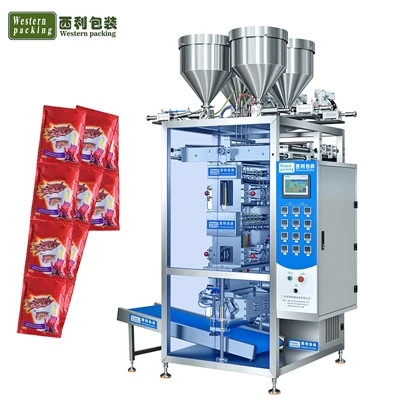
Wait, but let’s address the elephants in the room: what about small-scale vs large-scale operations? I get it — there’s a difference between a guy with a 50L drum of pesticide packaging 1L bottles out of his garage, and a big formulator with a 24/7 line packaging 20L jerrycans for global distribution. We don’t just have one machine that works for both. For small batch, independent formulators or farm co-ops, our semi-automatic rotary piston fillers are perfect. They can handle 500-1000 bottles a day, take up half a garage, and cost way less than a full line. Last year we sold three of these to small family-run pesticide brands in Georgia and California, and all of them said it’s been a game-changer compared to hand-filling, which was slow and messy. For larger operations, we have fully automated lines that can do 10,000+ bottles an hour, integrate with labeling and capping machines, and track every fill’s volume for compliance reports — super important for big companies that have to submit batch data to regulators.
But here’s the thing I always tell people: a liquid packaging machine isn’t a “one-size-fits-all” tool, even for non-pesticide liquids, and for pesticides, you need to make sure the machine is customized to your specific pesticide. I’ve had clients come to us saying “your machine should work, right? We just package X pesticide” and when we ask for the chemical specs, it turns out their pesticide is a highly corrosive acidic formula, and they tried a machine with aluminum parts. That’s a mistake anyone can make if they don’t ask the right questions. So when you’re shopping around for a pesticide packaging machine, don’t just ask “can this package liquid pesticides?” Ask: what materials are the wetted parts made of? Is there an agitator if my product has suspended solids? Does it handle volatile chemicals without leaking? Can it be cleaned easily between batches? If a supplier can’t answer those specific questions, keep looking — or call me, I’ll walk you through it for free, no sales pressure.
Now, let’s talk about common mistakes I see new formulators make. First, going cheap on parts. I get it, budgets are tight — but buying a machine with cheap steel parts that rust in 2 months is way more expensive in the long run, because you have to replace parts, shut down production, and lose money on wasted product. Second, not accounting for product viscosity and consistency. I can’t tell you how many times a client says “our pesticide is the same as the one you tested” only to realize theirs has 20% more solid particles, so the nozzle clogs every hour. That’s why testing your actual product on our machine is non-negotiable. Third, ignoring safety features. Pesticide fumes aren’t just annoying — they’re toxic, and if you’re running a machine that doesn’t contain them, you’re putting your workers at risk and could get fined by OSHA (or your local labor/ag body). We make safety a non-negotiable part of every machine we build for pesticide use, not an afterthought.
Wait, but is there any pesticide we can’t handle? Let’s be real — no machine works for every single chemical on the market. If you have a pesticide that’s so corrosive it eats through PTFE, or so volatile that no enclosed machine can contain its fumes, we’ll tell you straight up. We’re not here to sell you something that’ll break. But 90% of the liquid pesticides being made right now — ECs, SCs, soluble liquids, even some specialty fumigants — our machines work great for them. Last year we did testing on a new bio-based pesticide that’s more corrosive than traditional ones, and we modified our PTFE lining to be even thicker, and it’s been running flawlessly for the client since March. That’s the kind of problem-solving we do, not just slapping a machine together.
Let’s wrap this up, because I know you’re here for the practical stuff, not a sales pitch. So to answer the original question: yes, a liquid packaging machine can absolutely be used for liquid pesticides — but only if it’s built with the right materials, has the right features for your specific pesticide, and prioritizes safety and contamination control. Our line of liquid packaging machines is designed exactly for this: 316L stainless steel and PTFE wetted parts, adjustable fills for all viscosities, agitators for suspended solids, enclosed fume control, and easy sanitization. We’ve worked with 40+ pesticide formulators over the past 5 years, from small independent brands to large national distributors, and not one of them has had a major failure related to machine design.
If you’re a formulator, co-op, or business owner looking to upgrade your pesticide packaging, or you’re just tired of hand-filling, constant clogs, or part failures, hit us up for a free consultation. We can send you test results for machines running your specific pesticide, walk you through different options for small or large batches, and make sure you get a machine that fits your needs and your budget. No hidden fees, no jargon, just real answers from someone who’s actually been in this industry for years, not just reading spec sheets.
Liquid Packaging Machine References:
- Food and Agriculture Organization of the United Nations. (2021). Packaging of Liquid Pesticides: Best Practices for Small and Medium-Scale Formulators. FAO Agricultural and Engineering Technical Report.
- Occupational Safety and Health Administration (OSHA). (2022). Safety Guidelines for Packaging and Handling Toxic Agricultural Chemicals. OSHA Publication 3567-02N.
- American Society of Mechanical Engineers (ASME). (2020). Design Standards for Corrosion-Resistant Liquid Packaging Equipment for Agrochemicals. ASME BPE-2020 Supplement.
- European Food Safety Authority (EFSA). (2019). Batch Validation and Contamination Control in Pesticide Packaging Operations. EFSA Journal, 17(10), 5892.
Guangzhou Western Packing Co., Limited
Guangzhou Western Packing Co., Limited is one of the most professional liquid packaging machine manufacturers and suppliers in China, also supports custom service. With abundant experience, we warmly welcome you to wholesale durable liquid packaging machine at competitive price from our factory.
Address: No.3, Yilong street, Wulonggang, Zhongluotan Twon, Baiyun District, Guangzhou
E-mail: david@westernpacking.com
WebSite: https://www.westernpackingusa.com/
