A few months back, I got a frantic call from a regular customer—we’ve been supplying sway bar ball joints to his independent repair shop for six years, so I know he doesn’t reach out unless something’s really wrong. His team had towed in a 2018 Toyota Tacoma that had just been driven 20 miles from a highway stop, and the driver had reported the steering “feeling loose” before the truck veered sharply into the shoulder. When they pulled the truck apart, the sway bar ball joint on the driver’s side was completely fractured—sheared clean through at the connection to the control arm. That incident stuck with me, because it wasn’t just a “broken part” problem. It was a perfect example of what happens when you ignore a worn or bad sway bar ball joint, and I don’t think enough drivers understand how serious those small parts really are. As someone who’s spent 12 years in the sway bar ball joint supply business, I’ve seen every consequence of a failed component first-hand, from minor handling issues to dangerous, avoidable accidents. Sway Bar Ball Joint
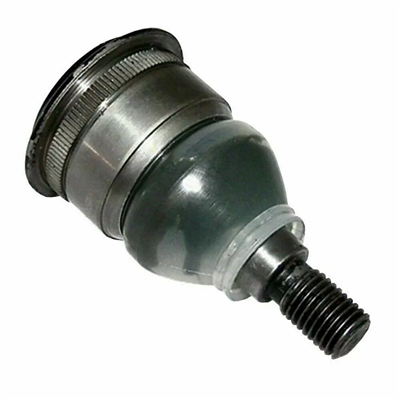
Let’s start with the basics, because I think a lot of drivers don’t know what a sway bar ball joint even does. The sway bar (also called a stabilizer bar) is a thin, rigid metal bar that runs along the underside of a vehicle, connecting the left and right sides of the suspension. It’s held in place by two ball joints—one on each end—that attach the bar to the control arms or the steering knuckles. Those ball joints aren’t just there to hold the bar on. They allow the bar to pivot slightly when the suspension moves up and down over bumps, but they resist the bar from twisting too much during turns. That resistance is what keeps your vehicle from leaning way too much when you take a corner, merge onto a highway, or swerve to avoid a pothole or a stopped car. A bad sway bar ball joint means that pivot point is worn loose, corroded, or completely broken, so the sway bar can’t do its job. The effects start small, then build up fast, and they get way worse depending on how you drive and what kind of vehicle you have.
The first sign, usually, is something most drivers brush off as normal wear: vague, loose steering. It might feel like the steering wheel has more play than usual, like you have to turn it an extra half-inch before the tires actually respond. For a while, that’s all it is—just that small, dead spot. But that play comes from the worn ball joint’s internal bearings or tapered connection wearing down. Every time you hit a bump, turn sharply, or accelerate, that loose joint moves, so the steering doesn’t transfer directly from your hands to the wheels. A lot of people write this off as “old age” or “just how my car drives,” but that’s a mistake. Over time, that play gets worse, and it doesn’t just affect steering. I’ve had customers tell me their car’s steering feels “sloppy” after a road trip, and when we pull apart the ball joint, there’s so much wear that the tapered pin is almost round, not the sharp, tapered shape it’s supposed to be. The worst part is, this symptom is easy to miss—until it’s too late.
Next up is handling instability during turns and maneuvers. The sway bar’s whole job is to reduce body roll, right? When you turn left, the right side of your suspension compresses, and the sway bar tries to pull the left side down a little to keep the vehicle level. If one ball joint is bad, that tension is gone. I remember a customer who had a worn ball joint on his Subaru Outback, and he took it camping on a dirt road. When he swerved to miss a fallen tree, the Outback rolled almost 30 degrees—way more than it should have—before he corrected it. He told me later he thought he was “going too fast” on the dirt, but the real problem was the worn ball joint. Without that sway bar working, body roll becomes extreme, even at slow speeds. For larger vehicles like pickup trucks, SUVs, and vans—things that have a higher center of gravity—this is a huge safety risk. A sudden swerve can lead to a rollover, or even just losing control enough to hit another car. I’ve seen repair invoices for vehicles that hit curbs because the driver couldn’t correct the lean fast enough, all because of a bad sway bar ball joint.
Then there’s the wear on other suspension parts, which is the hidden cost of ignoring a bad ball joint. The sway bar isn’t the only part taking the stress when the ball joint is worn. The control arms, steering knuckles, and even the tires have to compensate for the lost stability. When you’re turning and the sway bar can’t hold the vehicle level, those parts are under extra force they weren’t designed to handle. I had a customer a couple of years ago who replaced a bad sway bar ball joint on a 2020 Ford F-150, and when we inspected his tires, the inner edges were worn down to the cords. Turns out, the uneven weight distribution from the loose ball joint was causing the tires to lean in during turns, so they were only touching the road on the inside edge. He’d been replacing tires every six months, and after we put in our new heavy-duty ball joints, his tire life went back to normal. That’s a big one for drivers—ignoring a $20 or $30 ball joint leads to $800 tire bills every few months. Also, the control arms and steering knuckles get worn too. If the ball joint is completely broken, the sway bar can slam into the control arm repeatedly, bending it out of shape. A bent control arm isn’t just an alignment issue—it can cause uneven tire wear, pull to one side when you drive, and make steering even more unpredictable. I’ve seen customers go from a $30 ball joint problem to needing $1,500 in suspension repairs because they waited too long to fix it.
The most dangerous consequence, though, is a complete ball joint failure while driving at high speeds. That’s what happened to the Tacoma I mentioned earlier. The driver was doing about 65 mph when he felt the steering loosen, and by the time he hit the shoulder, the sway bar was flopping around under the truck, scraping the pavement. At highway speeds, a complete sway bar ball joint failure is catastrophic. The sway bar can come loose, flailing under the vehicle and hitting other parts like the exhaust or brake lines. If a brake line gets damaged, you lose braking power, which is a recipe for a serious accident. Even if it doesn’t hit a brake line, the loss of steering control at 65 mph means you have almost no time to react. I’ve heard of accidents where cars veered into oncoming traffic or off the road, all because a sway bar ball joint failed at highway speed. The scary part is, these failures don’t give much warning. A worn ball joint might make a clunking noise over bumps for a few weeks, but by the time that noise stops, the joint is usually already about to break. A lot of drivers ignore that clunk, writing it off as a loose heat shield or a worn bushing, and that’s how accidents happen.
Now, I want to be clear: not all sway bar ball joints are created equal. As a supplier, I’ve seen every type—cheap, offshore-made joints that wear out in 20,000 miles, and heavy-duty, precision-machined joints that last 100,000 miles or more. A lot of the failure we see isn’t just from wear over time, but from using low-quality parts that can’t handle the stress. I’ve had repair shops tell me they put in cheap ball joints to save a few bucks, and within a year, they’re coming back with another broken joint. When you’re driving, especially if you do a lot of towing, off-roading, or commute on rough roads, you need a ball joint that’s built to take that constant pressure. A bad ball joint isn’t just a problem with the part—it’s a problem with choosing the wrong part, or waiting too long to replace a worn one.
So what can drivers do to avoid these issues? First, listen to your car. If you hear a clunking or rattling noise when you go over bumps, or the steering feels loose or sloppy, get it checked out by a mechanic right away. Don’t wait for it to get worse. Second, don’t cut corners on replacement parts. A good sway bar ball joint is an investment in your safety and the longevity of your other suspension parts. I always tell our customers that a $50 quality ball joint is way better than a $20 cheap one—you’ll save money in the long run, and you’ll be safer on the road. Third, if you do a lot of towing or off-roading, consider upgrading to a heavy-duty ball joint. Those conditions put way more stress on the sway bar, so a standard ball joint might wear out faster.
At the end of the day, sway bar ball joints are small, unassuming parts. You rarely think about them until they break. But as someone who’s been in the business for years, I can’t stress enough how much they matter. They’re the difference between a smooth, safe drive and a loose steering wheel, a rollover risk, or even a serious accident. The consequences of driving with a bad sway bar ball joint aren’t just minor inconveniences—they’re threats to your safety, your wallet, and the people around you on the road.

If you’re a mechanic looking for reliable, high-quality sway bar ball joints for your shop, or a vehicle owner looking to upgrade or replace worn parts, we’re here to help. We build our ball joints to meet strict quality standards, using precision machining and durable materials to handle all kinds of driving conditions, from daily commutes to heavy towing and off-roading. Don’t let a worn or bad sway bar ball joint put you or your customers at risk—reach out to us to discuss your needs and get the right parts for your vehicle.
Outer Ball Joint References:
- Automotive Suspension and Steering Technology: A Guide for Technicians, ASE International, 2021.
- Highway Safety Report: Suspension Component Failure and Motor Vehicle Crashes, National Highway Traffic Safety Administration (NHTSA), 2022.
- Sway Bar Design and Performance for Modern Vehicles, SAE International Journal of Passenger Cars – Mechanical Systems, Vol. 15, No. 3, 2022.
- Independent Repair Shop Parts Reliability Study, Automotive Aftermarket Suppliers Association (AASA), 2023.
Taizhou Huazhe Auto Parts Co., Ltd.
As one of the most professional sway bar ball joint manufacturers and suppliers in China, we’re featured by quality products and low price. Please rest assured to buy bulk high-grade sway bar ball joint in stock here from our factory. For pricelist, contact us now.
Address: No. 2828, Binkang Avenue, Sanjia Street, Taizhou Bay New Area, Taizhou City, Zhejiang Province
E-mail: 19906762800@163.com
WebSite: https://www.huazheindustry.com/
