Yo, what’s up! I’m a supplier of straight connectors, and I often get asked about the customization options for these little but super – important gadgets. So, I thought I’d write this blog to lay it all out for you. Straight Connector

First things first, let’s talk about the basics. A straight connector is a device used to join two cables or components in a straight line, and it’s essential in all sorts of industries, from electronics to automotive.
Material Customization
One of the most significant customization options for straight connectors is the choice of materials. The type of material used can have a huge impact on the connector’s performance, durability, and cost.
Metal Components
For the conductive parts of the straight connector, copper is a popular choice. It’s highly conductive, which means it allows electricity to flow through it with minimal resistance. That’s super important if you’re dealing with high – power applications. But copper can be a bit on the expensive side. So, for cost – conscious projects, we also offer connectors with brass components. Brass is still a good conductor, and it’s more affordable than copper.
When it comes to the outer shell of the connector, stainless steel is a top pick. It’s incredibly durable, resistant to corrosion, and can withstand harsh environmental conditions. For less demanding environments, aluminum can be used. It’s lightweight and has decent corrosion resistance, and it’s a great option if you’re looking to cut down on weight.
Insulating Materials
The insulating materials are just as important as the conductive ones. For high – voltage applications, we often use ceramic insulators. They can handle high voltages without breaking down and are very stable at high temperatures. But ceramic is brittle and can be a bit tricky to work with.
For more common, low – voltage applications, plastic is the go – to. There are different types of plastics, like PVC (polyvinyl chloride) and PTFE (polytetrafluoroethylene). PVC is cheap, easy to mold, and has good insulating properties. PTFE, on the other hand, is more expensive but offers better performance in terms of temperature resistance and electrical insulation.
Size and Shape Customization
The size and shape of a straight connector can vary widely depending on the application.
Size
We can make straight connectors in all sorts of sizes. For example, in the electronics industry, where space is often limited, we can produce very small connectors. These micro – connectors are designed to fit into tight spaces on circuit boards. On the other hand, in the power industry, larger connectors are needed to handle higher currents. We can customize the length, width, and height of the connector according to your requirements.
Shape
The shape of the connector can also be customized. Most straight connectors are, well, straight. But sometimes, you might need a connector with a specific shape to fit into a particular housing or to mate with another component. We can create connectors with angled ends or connectors that are bent in a specific way. Some applications might require a connector with a special profile, and we’ve got the technology to make it happen.
Contact Type and Configuration
Contact Type
There are different types of contacts in straight connectors. Pin contacts are the most common. They’re simple and reliable, and they can be used in a wide range of applications. Socket contacts are used to mate with pin contacts. They provide a secure connection and are often used in situations where the connection needs to be easily removable.
For high – frequency applications, we also offer spring – loaded contacts. These contacts can compensate for small variations in distance and ensure a stable electrical connection. They’re great for applications where vibration or movement might occur.
Contact Configuration
The number and arrangement of contacts in a straight connector can be customized. You might need a connector with just a few contacts for a simple application, or you could require a multi – pin connector with dozens of contacts for a complex system. We can design the contact configuration to match your specific electrical requirements. For example, if you’re working on a project that needs data transfer, power supply, and signal transmission, we can arrange the contacts in a way that separates these functions and minimizes interference.
Surface Finish Customization
The surface finish of a straight connector can have several benefits.
Anti – Corrosion Coating
We can apply an anti – corrosion coating to the metal parts of the connector. This is especially important if the connector is going to be used in a harsh environment, like in the marine or automotive industries. A coating like nickel or tin can protect the metal from rust and other forms of corrosion, which can extend the life of the connector.
Aesthetic Finish
Sometimes, the appearance of the connector matters, especially if it’s going to be visible in a consumer product. We can offer different aesthetic finishes, like a polished finish for a sleek look or a textured finish for a more industrial look. This can enhance the overall appearance of the product and make it more appealing to customers.
Special Features Customization
Sealing and Gasketing
In applications where the connector needs to be protected from dust, water, or other contaminants, we can add sealing and gasketing features. This can be a rubber seal around the connector body or a gasket between the mating parts. These seals can prevent moisture and debris from entering the connector, which can improve its reliability and performance.
Locking Mechanisms
To ensure a secure connection, we can add locking mechanisms to the connector. There are different types of locking mechanisms, like screw – locks, bayonet – locks, and snap – locks. Screw – locks provide a very secure connection and are often used in high – vibration environments. Bayonet – locks are quick and easy to use, and snap – locks offer a simple and reliable way to keep the connector in place.
EMI/RFI Shielding
In electronic applications, electromagnetic interference (EMI) and radio – frequency interference (RFI) can be a big problem. We can add EMI/RFI shielding to the connector to reduce these interferences. This can be a metal shield around the connector body or a special shielding material inside the connector.
So, there you have it! These are just some of the customization options for straight connectors. As a supplier, I know that every project is different, and that’s why we’re here to work with you to create the perfect connector for your needs. Whether you’re a small startup working on a new electronic device or a large corporation in the automotive industry, we’ve got the expertise and the technology to meet your requirements.
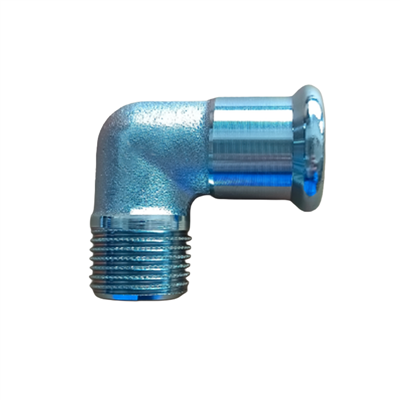
If you’re interested in customizing straight connectors for your project, don’t hesitate to reach out. We’re always happy to have a chat, discuss your ideas, and provide you with a quote. Let’s work together to make your project a success!
Elbow Connector References
- "Connectors Handbook" by Connector Manufacturers Association
- "Electrical Connector Design and Application" by various industry experts
Taizhou Tongda Machinery Co., Ltd.
As one of the most professional straight connector manufacturers and suppliers in China, we also support customized service. We warmly welcome you to wholesale high quality straight connector in stock here from our factory. For quotation, contact us now.
Address: No. 20, Chuyang Road, Xiaoshuibu Industrial Zone, Yucheng Subdistrict, Yuhuan City, Taizhou City, Zhejiang Province
E-mail: sw@chinatdjx.com
WebSite: https://www.tongdaparts.com/
