Hey there! I’m a supplier of CIIR+EPDM hoses, and today I wanna chat about the hardness of these awesome hoses. CIIR+EPDM Hose
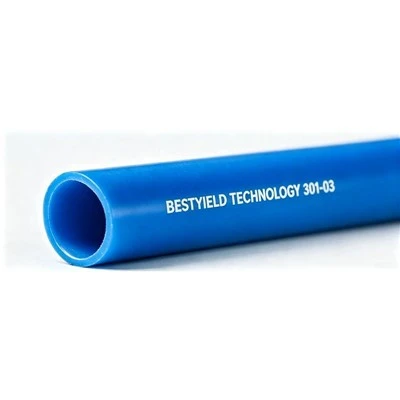
First off, let’s break down what CIIR and EPDM are. CIIR stands for Chlorinated Isobutylene – Isoprene Rubber. It’s got some great properties like good chemical resistance and low gas permeability. EPDM, on the other hand, is Ethylene – Propylene – Diene Monomer. It’s known for its excellent weatherability, heat resistance, and ozone resistance. When you combine these two rubbers in a hose, you get a product that has a unique set of characteristics, and hardness is one of the key factors.
The hardness of a CIIR+EPDM hose is super important. It affects how the hose behaves in different applications. You know, when you’re using a hose, you need it to be tough enough to withstand the pressure and the environment it’s in, but also flexible enough to be easily maneuvered and installed.
The hardness of a rubber product is usually measured on the Shore scale. There are different types of Shore scales, but for hoses like CIIR+EPDM ones, we mostly use the Shore A scale. This scale ranges from 0 to 100, with higher numbers indicating a harder material.
In the case of CIIR+EPDM hoses, the hardness can vary depending on a few things. One of the main factors is the ratio of CIIR to EPDM in the blend. If there’s a higher proportion of CIIR, the hose might be a bit harder because CIIR generally has a stiffer nature compared to EPDM. A hose with more EPDM in the mix will tend to be more flexible, thus having a lower Shore A hardness value.
Another thing that can influence the hardness is the type and amount of fillers and additives used during the manufacturing process. Fillers like carbon black or silica can increase the hardness. They provide additional reinforcement to the rubber matrix, making it more rigid. Additives such as plasticizers can do the opposite. Plasticizers are substances that are added to make the rubber more flexible and reduce its hardness. So, by carefully controlling the amount of fillers and additives, we can fine – tune the hardness of the CIIR+EPDM hose to meet the specific requirements of our customers.
Let’s talk about the practical implications of different hardness levels. If you’re in an application where the hose needs to be very rigid and hold its shape under high pressure, you’d want a hose with a higher Shore A hardness. For example, in some industrial settings where there are high – pressure fluid transfer systems, a harder hose can prevent kinking and ensure a more stable flow of the fluid.
On the other hand, if the hose needs to be bent and routed around obstacles during installation, a lower hardness would be more beneficial. This is often the case in automotive or small – scale plumbing applications. A more flexible hose can be easily shaped to fit into tight spaces without cracking or splitting.
We’ve done a lot of testing in our lab to figure out the optimal hardness for different uses. We test the hoses under various conditions, including different temperatures and pressures. For instance, at low temperatures, rubber tends to become more brittle. So, if a hose is going to be used in a cold environment, we need to make sure its hardness is adjusted in a way that it remains flexible enough to function properly.
We also take into account the abrasion resistance of the hose. A harder hose generally has better abrasion resistance. This is crucial in applications where the hose might rub against other surfaces or be exposed to rough environments. For example, in mining or construction sites, where hoses are often dragged along the ground or come into contact with rough materials, a harder CIIR+EPDM hose can last longer.
Now, let me share some real – life examples from our customers. One of our industrial clients needed a hose for a chemical – transfer process. They were dealing with corrosive chemicals at high pressures. We recommended a CIIR+EPDM hose with a relatively high Shore A hardness. The high hardness not only maintained the hose’s shape under pressure but also provided good chemical resistance due to the CIIR component. The customer was really happy with the performance of the hose, as it reduced the number of leaks and replacements.
Another customer in the automotive industry was looking for a hose for coolant circulation. They needed a hose that could be easily installed in the tight engine compartments. We provided them with a hose having a lower hardness, which was very flexible and could be bent around various engine parts without any issues.
We’re always here to help our customers find the right hardness for their specific needs. Whether you’re in the manufacturing, automotive, plumbing, or any other industry that uses hoses, we can work with you to come up with a solution.
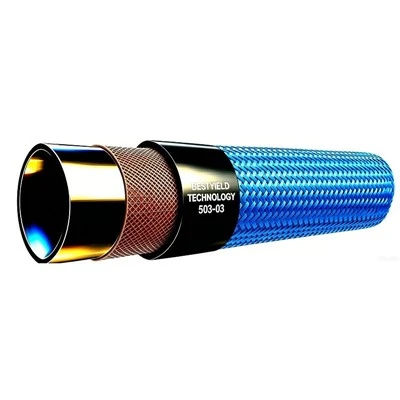
If you’re involved in a project that requires CIIR+EPDM hoses, don’t hesitate to reach out to me. We can have a chat about your requirements, the environment the hoses will be used in, and other factors that might affect the hardness. I’m confident that we can supply you with high – quality hoses that meet your exact needs. So, if you’re interested in purchasing CIIR+EPDM hoses, let’s start a conversation and see how we can work together.
Molded Part References
- Rubber Technology Handbook by Werner Hofmann
- Industrial Rubber Products: Design, Materials, and Applications by David A. Tortorello
BESTYIELD Technology (Huizhou) Co., Ltd.
BESTYIELD Technology (Huizhou) Co., Ltd. is one of the most professional ciir+epdm hose manufacturers and suppliers in China, featured by quality products and good price. Please rest assured to buy durable ciir+epdm hose made in China here and get quotation from our factory. Customized orders are welcome.
Address: Yinshan Industrial Zone, Liangjing Town, Huiyang District, Huizhou City, Guangdong Province
E-mail: rick@bestyield.net
WebSite: https://www.bestyield.org/
