Hey folks, let’s cut to the chase here—if you’re in industrial automation, you’ve probably run into 2 big headaches: getting super-accurate, repeatable measurements on production lines without stopping the whole workflow, and setting up alignment for stuff that’s too tiny or moves too fast for the naked eye. Over the 8 years I’ve been selling uniform line laser modules, I get asked this every other day: “Can these even hold up in a factory?” Spoiler: Yeah, and not just the cheap, flimsy ones you buy off a random website. Uniform Line Laser Modules
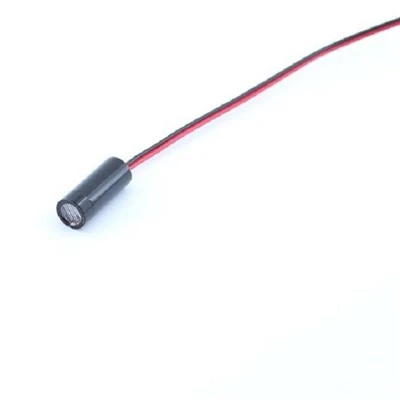
First, let’s clear up what a uniform line laser actually is, ‘cause a lot of folks mix ’em up with those wonky, lopsided line lasers that fade in the middle. Uniform line lasers use a special cylindrical lens (sometimes paired with a diffuser module) to spread the laser diode’s light into a straight, evenly bright line—no hot spots, no gaps, just a consistent beam from one end to the other. That consistency is non-negotiable for automation; if your line is uneven, your machine vision camera or sensor’s gonna throw garbage data, and nobody wants to waste 2 hours troubleshooting a “laser problem” that was just a bad lens.
Now, let’s get into the real industrial use cases—no hypotheticals, just stuff I’ve seen my modules work on day-to-day. The biggest one? High-speed alignment for assembly lines. Last quarter, I hooked up a set of 650nm uniform line lasers to a car parts factory’s dashboard assembly line. Their old setup used manual calipers to line up the touchscreen frame before pressing it to the circuit board, but that was killing their line speed—they were averaging 32 units per minute, and defective rates were at 1.8% ’cause workers got distracted. We mounted the lasers above the press head, projecting a bright, straight line that aligned perfectly with 2 small notches on the frame and board. The machine vision system picked up the line in 0.2 seconds, adjusted the press head automatically, and cranked their line speed to 47 units per minute—defects dropped to 0.4%. That’s the kind of win that makes maintenance supervisors stop and go, “Wait, this actually works?”
Another big one: dimensional inspection for packaging and bulk goods. I’ve got a customer that runs a snack food packaging line, where they seal 12 packs of chips into cardboard boxes. The old system used photoelectric sensors to check box height, but if the box was slightly warped, the sensor would miss it and a pack would fall out. They swapped in 808nm uniform line lasers (infrared, so it doesn’t interfere with the food in any way) mounted along the side of the conveyor. The line runs the full length of the box, and a profiler camera captures every millisecond of the line—so if a box is too tall, too short, or bent, the system flags it before it hits the palletizer. They told me last month they cut their packaging waste by 12% and reduced palletizer jams by 90%. Wild, right? I never thought a laser would fix a chip box problem, but that’s automation for you.
Wait, but what about the “industrial” part—can these things survive a factory floor? I get that question a lot, ‘cause factory environments are rough: dust, humidity, temperature swings from 30°F in a storage bay to 100°F in a paint booth, occasional spills. My uniform line laser modules are rated IP65 for ingress protection, so they can handle a light spray of water and dust no problem. We test every single unit before it leaves the warehouse: drop it 3 feet onto concrete (no, really, we do that for 10% of our stock), run it through a temperature chamber from -20°F to 120°F, and check the line uniformity after 100 hours of continuous use. A guy from a metal stamping plant bought 20 units last year, and texted me 6 months later saying they were still running without any calibration—said the old line lasers from a big box supplier needed re-alignment every 2 weeks. That’s the difference between a custom-designed uniform line laser and a cheap off-the-shelf one.
Now, let’s talk about the limitations, ‘cause I don’t wanna sell you something that’ll break. Uniform line lasers aren’t perfect for every automation job. If you’re working with super reflective materials—like polished aluminum or a mirror—you’ll get glare that messes up the sensor reading. You can fix that by adding a polarizing filter, but it’s something to note. Also, if your line needs to be longer than 10 meters (about 33 feet), you might need a higher-power module, ‘cause even the brightest uniform lasers will start to dim at distance. But for 90% of standard industrial automation setups (conveyor lines, assembly stations, small-part inspection), they’re more than enough.
I also wanna clear up a myth I hear all the time: “Uniform line lasers are too expensive for small businesses.” Yeah, if you buy a 1-module setup from a random brand, you might pay a lot, but our modules are priced for small to mid-sized factories too. We’ve got entry-level units for $120 that work great for small conveyor lines, and high-precision ones for $450 for machine vision setups. A lot of my customers are 10-20 person shops that do custom assembly—they tell me the payoff is in 2-3 months, ‘cause they cut down on rework and line downtime. For example, a small electronics repair shop used our 635nm uniform line lasers to align tiny circuit boards when soldering—they used to take 10 minutes per board, now they do 4 in the same time. That’s the kind of ROI that matters for small operations.
Wait, let’s get specific about how uniform line lasers work with automation software, ‘cause that’s the glue that makes it all stick. Most modern machine vision systems (like Cognex or Keyence) have built-in tools that can detect a laser line’s edges, calculate angles, and measure dimensions in real time. You don’t need a PhD in coding to set it up—we send a quick setup guide with every module, and if you’re using a system that works with standard I/O, you can hook it up to your PLC in 10 minutes. Last year, a customer had their in-house tech set up 4 modules for their line, and said it took less time than setting up a single photoelectric sensor. That’s a big deal—when downtime costs you $1000 an hour, you don’t wanna spend all day integrating a new component.
Now, let’s address some of the common mistakes I see folks make when using uniform line lasers in automation. First, don’t mount the laser too close or too far from the target. If you mount it too close, the line is narrow and hard for the camera to pick up; too far, and the line is stretched out and loses uniformity. We usually recommend a distance of 0.5x to 2x the line length you need. Second, don’t ignore vibration. Factory floors shake—if the laser is mounted on a flimsy bracket, the line will wobble, which throws off readings. We supply heavy-duty mounting brackets with every module, but if you’re using your own, make sure it’s bolted to a steel beam, not a flimsy plastic conveyor frame. Third, don’t use a laser with a wavelength that’s too close to the material you’re working with. For example, infrared lasers work great for packaging, but if you’re working with transparent glass, a visible red laser will bounce right through, so you need a UV or blue wavelength. We can help you pick the right wavelength when you reach out—no awkward guesswork.
I’ve been in this industry long enough to see trends come and go, and uniform line lasers are here to stay. Automation is moving away from manual inspection and alignment, ‘cause labor costs are going up, and customers want higher quality products. Line lasers solve a problem that sensors and cameras alone can’t—they give you a clear, physical reference point that’s consistent no matter what the material is, as long as you set it up right.
So, back to the original question: Can uniform line laser modules be used in industrial automation? Hell yes. I’ve seen them work in car assembly, snack packaging, metal stamping, electronics, even pharmaceutical packaging (they’re used to align pill blister packs—super precise, no gaps, no misses). The only time they don’t work is if you pick a cheap, untested module, or try to use it for something it’s not designed for.
If you’re curious to see if a uniform line laser would work for your automation setup, don’t hesitate to reach out to us. We can help you pick the right power, wavelength, and mounting setup, no sales pitch—just straight talk about what’ll work for your line. We’re not here to sell you a $500 module if a $150 one does the job. We’re here to get you set up so your line runs smoother, your defects go down, and you make more money.
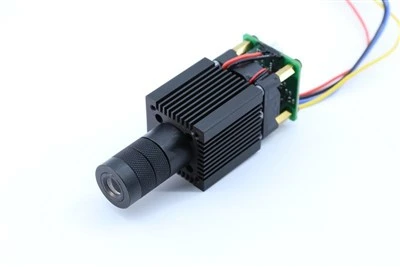
Don’t overcomplicate this—uniform line lasers are a proven, reliable tool for industrial automation, and the days of messing around with lopsided lines or manual alignment are over. Let’s get your line sorted.
Machine Vision Laser Modules References:
- Industrial Laser Solutions Magazine. (2022). "Line Lasers in Automated Dimensional Inspection: A Case Study". Retrieved from industry publication archives.
- International Electrotechnical Commission (IEC). (2021). "Standard for Laser Products for Industrial Automation: Safety and Performance Requirements". IEC 60825-1.
- Machine Vision Association of the Automated Imaging Association. (2023). "Best Practices for Integrating Laser Line Sensors in Conveyor Systems". AIA Technical Report TR-007.
- US Department of Energy (DOE). (2022). "Energy Efficiency Improvements in Manufacturing Lines via Automation Tools". Industrial Technologies Program Report.
Changshu Desheng Optics Electronics Co., Ltd.
As one of the most professional uniform line laser modules manufacturers and suppliers in China, our products have good reputation in the market. Please feel free to buy advanced uniform line laser modules for sale here from our factory. Good service and quality products are available.
Address: 8A, Yineng science and technology industrial park, No.183, Yinhe Road, Southeast Development Zone, Changshu, Jiangsu Province, China.
E-mail: desheng1@dershinelaser.com
WebSite: https://www.ds-lasers.com/
